
Àpèjúwe
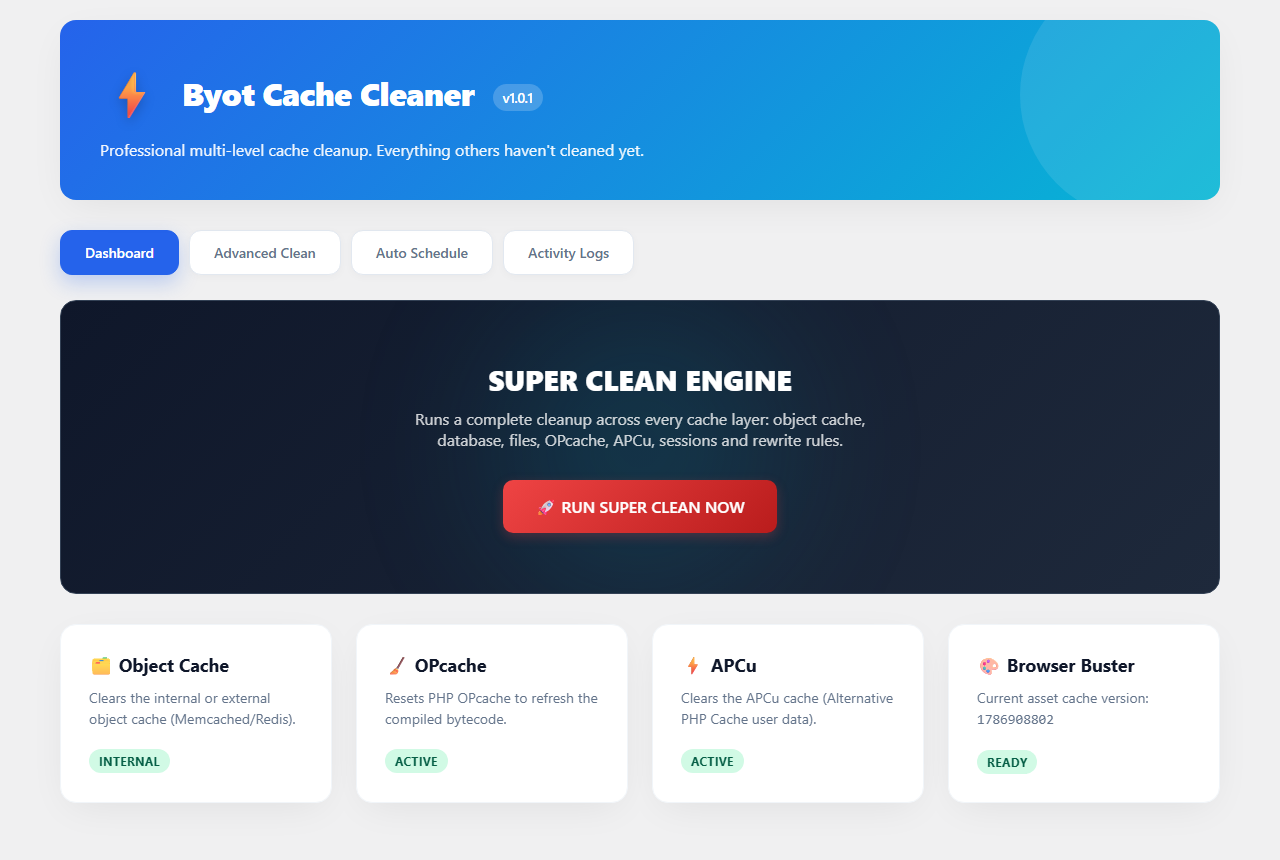
Byot Cache Cleaner clears every cache layer a WordPress site typically accumulates, from a single modern dashboard, instead of hunting through several different tools.
What it cleans:
- Object cache (internal WordPress cache or external stores such as Memcached/Redis)
- Expired and orphaned transients
- Database bloat: post revisions, auto-drafts, trashed posts, spam/trashed comments, orphaned post and comment meta, plus table optimization
- Filesystem cache directories left behind by other caching tools
- OPcache (when the extension is available on the server)
- APCu user cache (when the extension is available on the server)
- Stale PHP session files
- Rewrite rules (permalink structure)
- Asset/browser cache version, for cache-busting
Included tools:
- One-click “Super Clean” that runs every layer at once
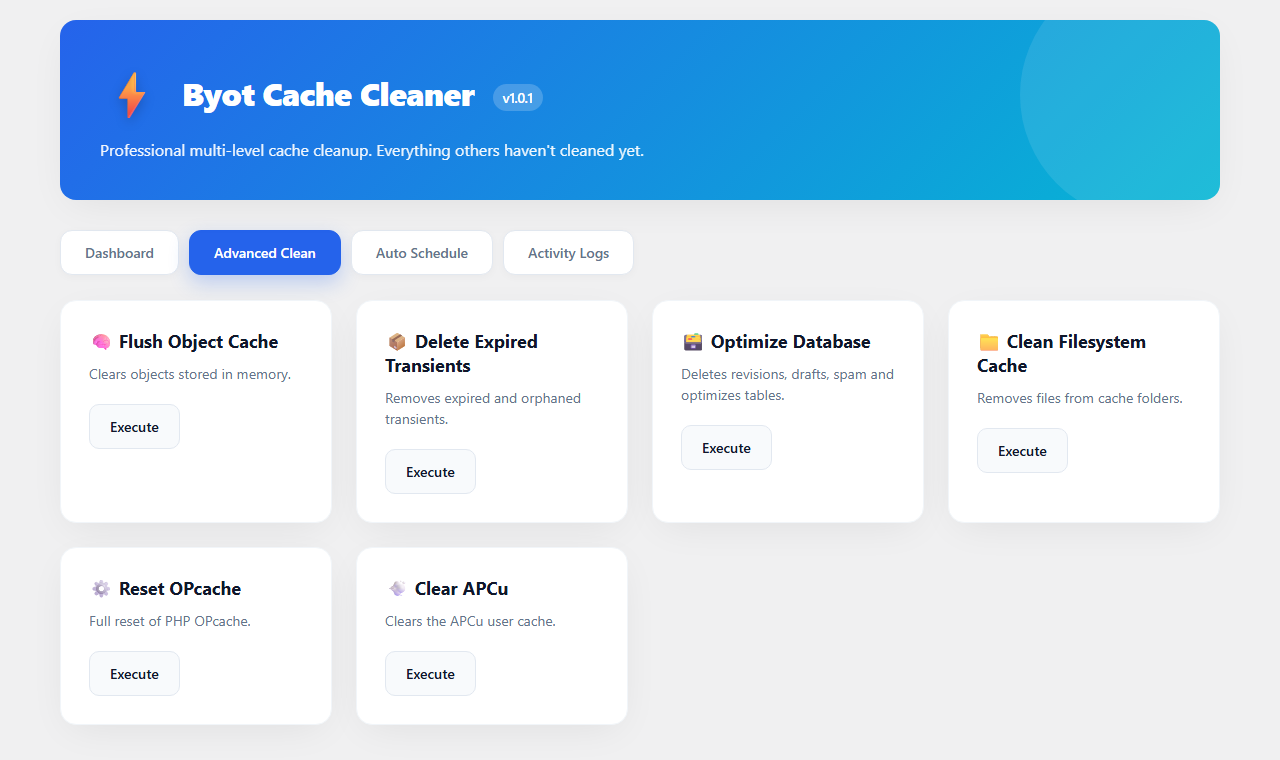
- Advanced tab to trigger any single cleanup layer on its own
- Optional daily auto-clean, scheduled through WP-Cron
- Activity log with a history of every cleanup run
- Admin bar shortcut to clean cache from anywhere in wp-admin
- Dashboard widget with a quick cache status overview
Notes on the database cleanup
The database cleanup step permanently removes trashed posts and spam/trashed comments as part of its standard run. Review your trash before using it if you might need to recover something — this step is irreversible by design, same as emptying WordPressÌtumọ̀ Yorùbá: ’s own trash.
Notes on OPcache / APCu
Those two actions only have an effect if the corresponding PHP extension is installed and enabled by your host. If it isnÌtumọ̀ Yorùbá: ’t, the dashboard reports the layer as “Inactive” and the action safely does nothing.
Àwọn àwòrán ìbòjú
Ìgbéwọlẹ̀
- In your WordPress admin, go to Plugins Add New.
- Search for “Byot Cache Cleaner”.
- Click Install Now, then Activate.
- Open “Byot Cache” from the admin menu to get started.
Manual installation:
- Upload the plugin folder to
/wp-content/plugins/. - Activate the plugin through the “Plugins” menu in WordPress.
- Open “Byot Cache” from the admin menu.
FAQ
-
Is the database cleanup safe?
-
It permanently deletes trashed posts and spam/trashed comments as part of the standard cleanup. Review your trash first if you need to recover anything.
-
Why do OPcache/APCu show “Inactive” on my dashboard?
-
Those controls only take effect if the corresponding PHP extension is installed and enabled on your server. If your host doesnÌtumọ̀ Yorùbá: ’t provide them, the badge reports “Inactive” and the action safely does nothing.
-
Does it work with Redis or Memcached?
-
Yes. The object cache action flushes whatever object cache backend WordPress is currently using, whether thatÌtumọ̀ Yorùbá: ’s an external store like Redis/Memcached or the default internal cache.
-
Does this plugin phone home or send data anywhere?
-
No. All actions run locally against your own siteÌtumọ̀ Yorùbá: ’s cache, database, and filesystem. Nothing is sent to any external service.
Àwọn àgbéyẹ̀wò
Kò sí àwọn àgbéyẹ̀wò fún plugin yìí.
Àwọn Olùkópa & Olùgbéejáde
“Byot Cache Cleaner” jẹ́ ètò ìṣàmúlò orísun ṣíṣí sílẹ̀. Àwọn ènìyàn wọ̀nyí ti ṣe ìkópa sí plugin yìí.
Àwọn Olùkópa
Túmọ̀ “Byot Cache Cleaner” sí èdè rẹ.
Ṣe o nífẹ̀ẹ́ sí ìdàgbàsókè?
Ṣàwárí koodu, ṣàyẹ̀wò ibi ìpamọ́ SVN, tàbí ṣe àgbékalẹ̀ sí àkọsílẹ̀ ìdàgbàsókè nípasẹ̀ RSS.
Àkọsílẹ̀ àwọn àyípadà
1.0.1
- Renamed the plugin.
- Fixed the uploads-directory path to resolve through wp_upload_dir() instead of a hardcoded path.
1.0.0
- Initial release.